
What is EPR?

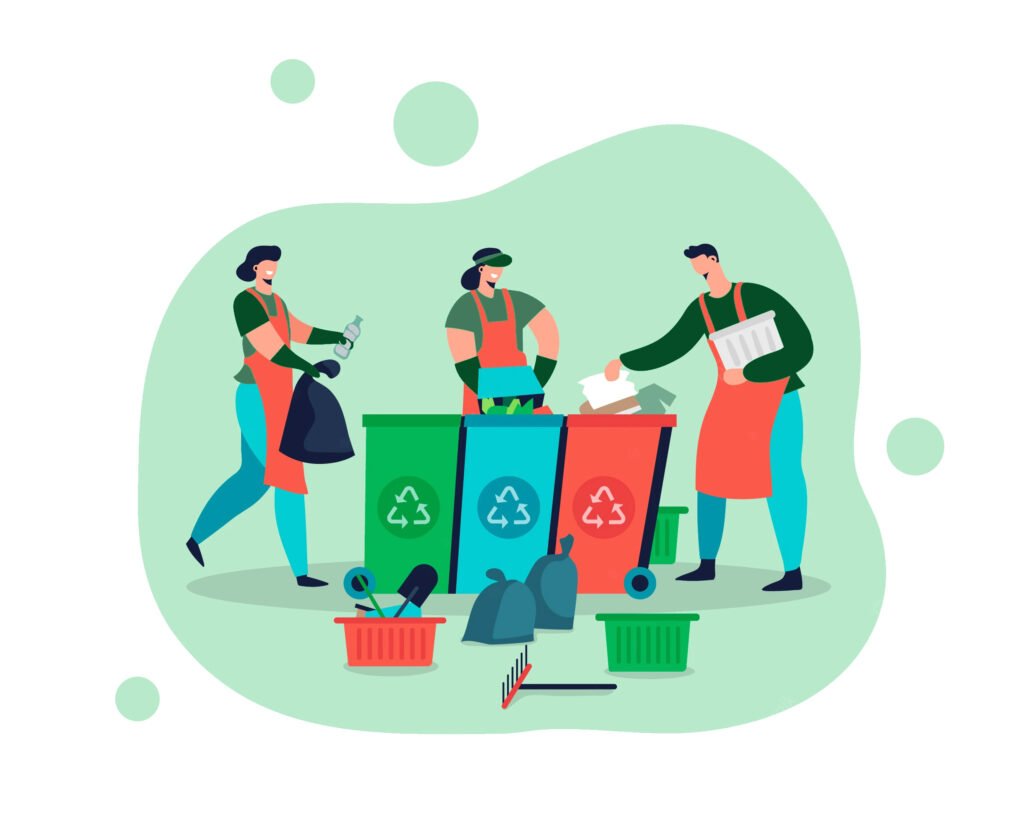
Extended Producer Responsibility (EPR) system is a policy approach that makes producers responsible for their products along the entire lifecycle, including at the post-consumer stage (OECD, 2016)

Key goal: Incentivise producers to design environmentally friendly products and to reduce waste by making them responsible for related waste management, including costs for waste collection and treatment.

Components of an EPR system

Core Principles

Product Stewardship

Producers take on the responsibility for the entire lifecycle of their products, including take-back, recycling, and final disposal

Incentive for Eco-design

By making producers responsible for waste management costs, EPR encourages the development of products that are easier to recycle or reuse (more circularity; less end-of-pipe)
Polluter Pays Principle

Those who generate pollution (producers) should bear the costs associated with managing it to prevent environmental harm

Comprehensive Policy Package

EPR is typically conceived as a comprehensive policy package combining various instruments to achieve its objectives

Multi-stakeholder approach

Effective implementation of EPR often involves a multi-stakeholder panel comprising experts, policymakers, researchers, industry associations, and consumer groups

Clear Regulations and Accountability

Successful EPR implementation necessitates clear regulations where every stakeholder is held accountable
Goals

Environmental Goals:

  • Reduce waste generation and promote waste prevention
  • Decrease the volume of waste destined for final disposal (landfills and incineration)
  • Increase recycling and recovery rates, maximizing resource efficiency
  • Minimize the environmental impacts associated with waste, such as pollution and resource depletion
  • Incentivize eco-design

Economic Goals:

  • Transfer end-of-life management costs from governments to producers and consumers
  • Create economic opportunities and foster innovation in the recycling and waste management sectors
  • Promote a transition towards a circular economy


Social Goals:

  • Improve waste management practices, leading to cleaner and healthier environments, particularly in developing countries
  • Create job opportunities in waste collection, sorting, and recycling, potentially benefiting the informal sector
  • Reduce health risks associated with mismanaged waste
 

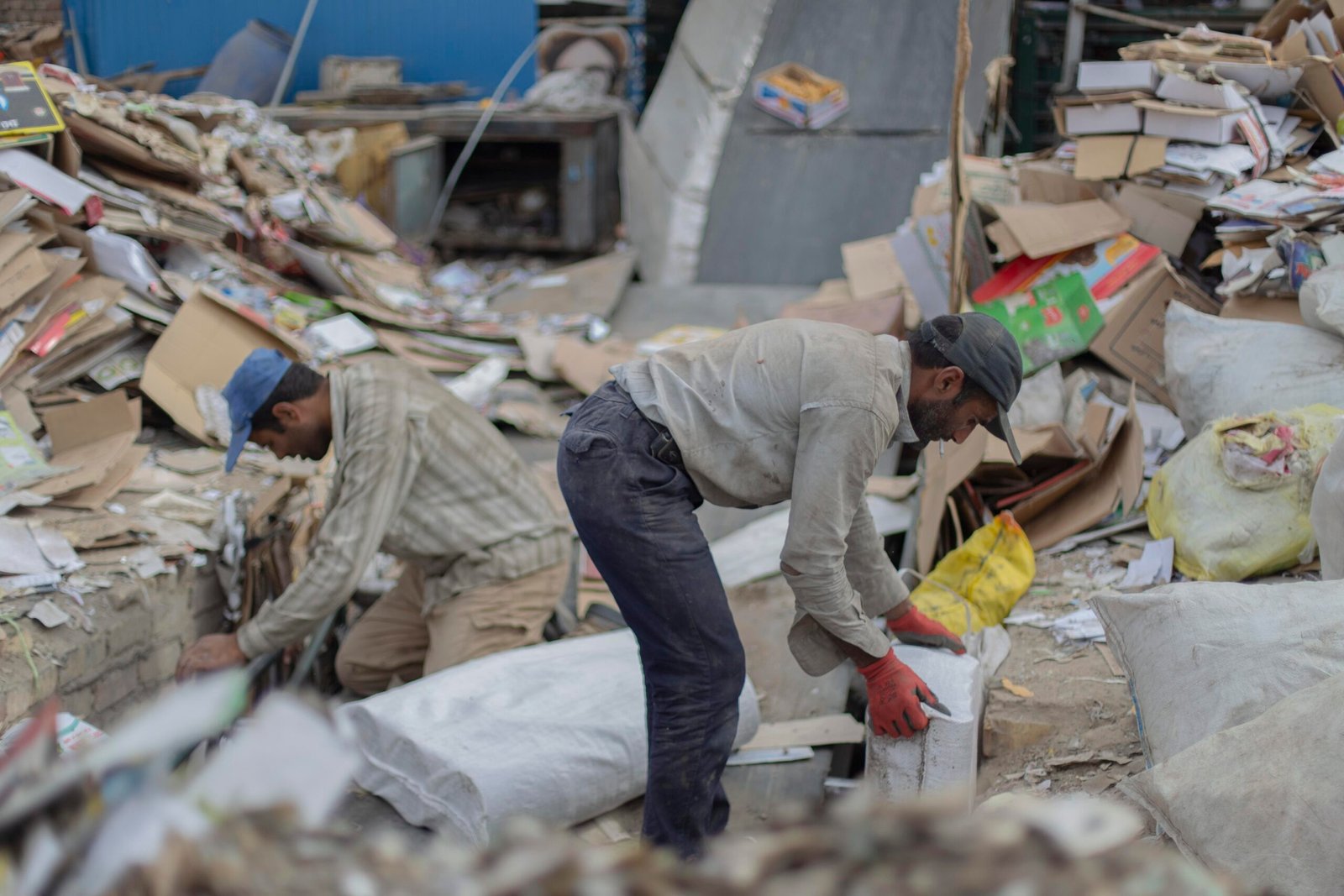
Bringing the informal sector into the system

Integrating the informal sector is key because it brings their valuable experience and efficiency into the system, helps make the EPR framework work smoothly without overlap, and creates real social and economic benefits — from fair pay to better working conditions.

@Mostafa Meraji | Pixabay

How to integrate the informal sector?

Involve early: include informal workers from the start when designing EPR systems, so their voices and experience are heard.

Create a clear path: help them join the formal system through simple registration, licenses, or contracts that offer job security and protection.

Support financially: ensure fair pay and give incentives like better conditions for waste collection and drop-off.

EPR in the MENA Region

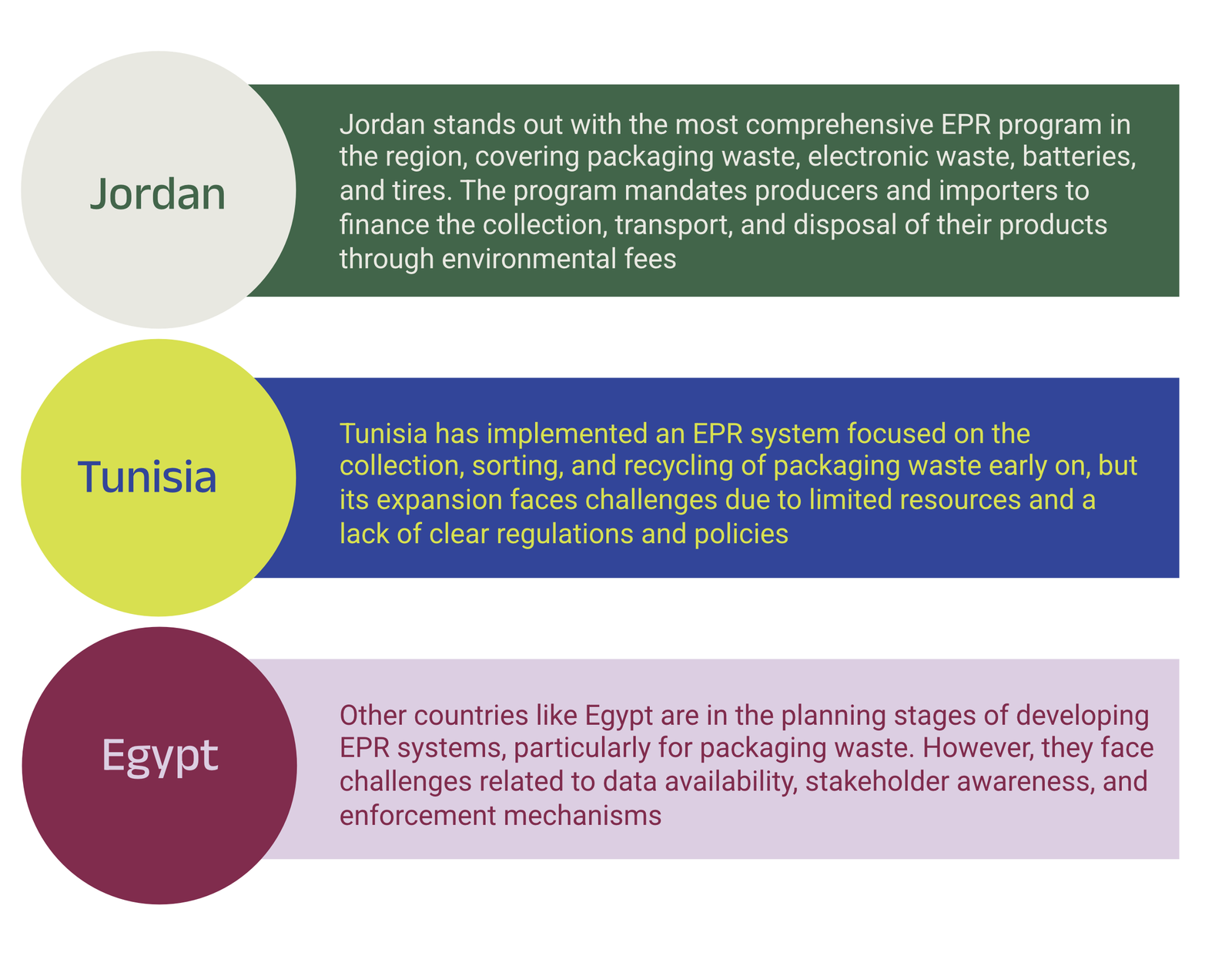
Most MENA countries primarily implement Circular Economy principles in fragmented silos: waste management activities, focusing on disposal, recovery, and recycling; rather than a systemic product lifecycle approach. EPR is steadily gaining traction across the MENA region as governments adopt policies to shift waste management costs and accountability to producers. Countries such as Egypt and Jordan have introduced enabling legislation and early implementation measures. Established systems already operate in Tunisia, whereas others—like Morocco and Lebanon—are developing EPR roadmaps. Overall, the region is transitioning from fragmented recycling initiatives toward structured producer responsibility schemes aligned with global circular economy goals.