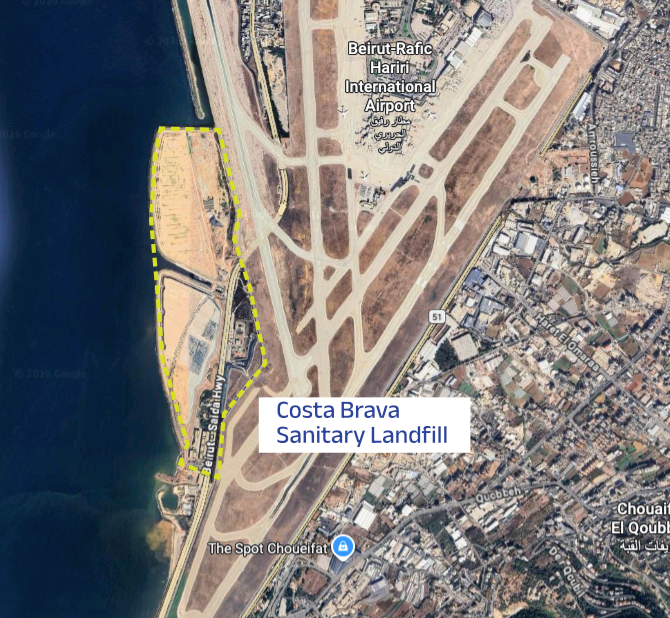
Costa Brava Sanitary Landfill
33°48'49.7"N 35°28'49.6"E
Operating beyond capacity
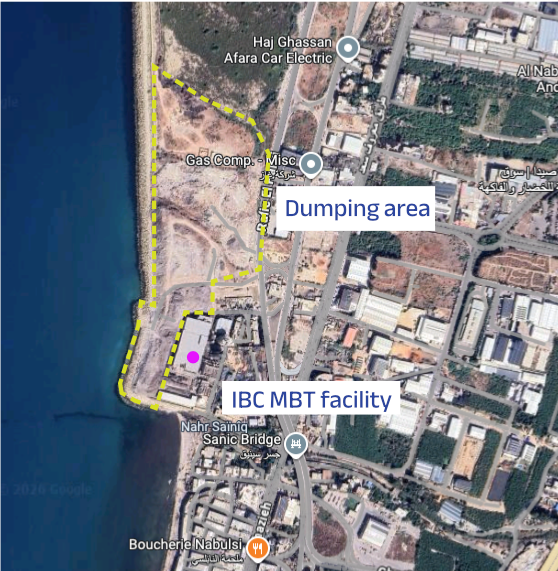
IBC mechanical biological treatment (MBT) facility
33°32'15.0"N 35°21'42.1"E
Design capacity: 350 tonnes/day
Currently receiving around 220–230 t/d
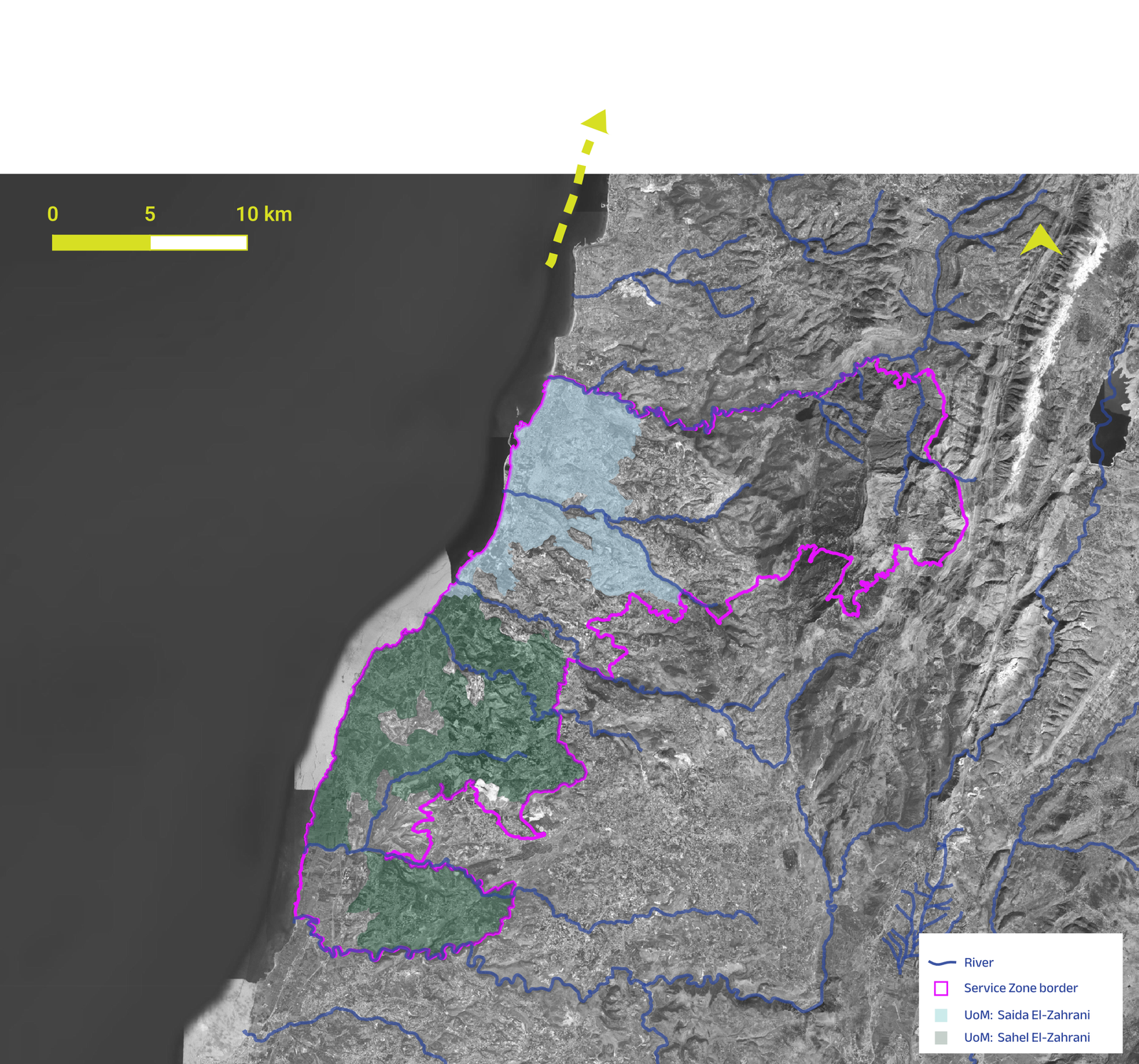
Service Zone 9 operates under a decentralized governance model in which municipalities and Unions of Municipalities retain responsibility for waste services, while private contractors provide operational collection and transport.
In Saida District, waste is collected and transported by New Trading & Contracting SAL (NTCC). Collected waste is delivered to the IBC mechanical biological treatment (MBT) facility for treatment, while residual waste is disposed of at the adjacent seaside dumpsite. Some municipalities maintain their own collection vehicles, though these are often in poor condition, with uncovered trucks causing minor leakages during transport.
Jezzine previously sent waste to IBC but, since January 2026, has shifted to private collection with disposal at the Costa Brava Sanitary Landfill (operating beyond capacity). Sahel El Zahrani lacks centralized treatment or landfill infrastructure, relying on local recycling facilities and informal dumping sites.
Waste collection relies primarily on communal bins receiving mixed waste, with limited source separation across the service zone. Households, institutions, and businesses bring waste to designated collection points for secondary collection. Overall collection coverage is estimated at close to 100%, and bin capacity is generally sufficient with no major overflow issues observed. However, formal material recovery remains limited despite the presence of treatment infrastructure.
*Collected waste is higher than generated waste because the two figures are based on different methods. The generated waste estimate is based on a sample (7-day WaCT campaign) and extrapolated using per-capita generation rates and population assumptions, while the collected waste figure is obtained from weighbridge records or measured at disposal sites. Seasonal variations, underrepresentation of certain households, or short sampling duration may contribute to underestimation in the generated waste figures.
*Due to challenges in accessing data, a proxy value of 30% was applied to account for waste generated by non-household sources, including markets, commercial establishments, private and public sector facilities, educational institutions, hospitals, and hotels.
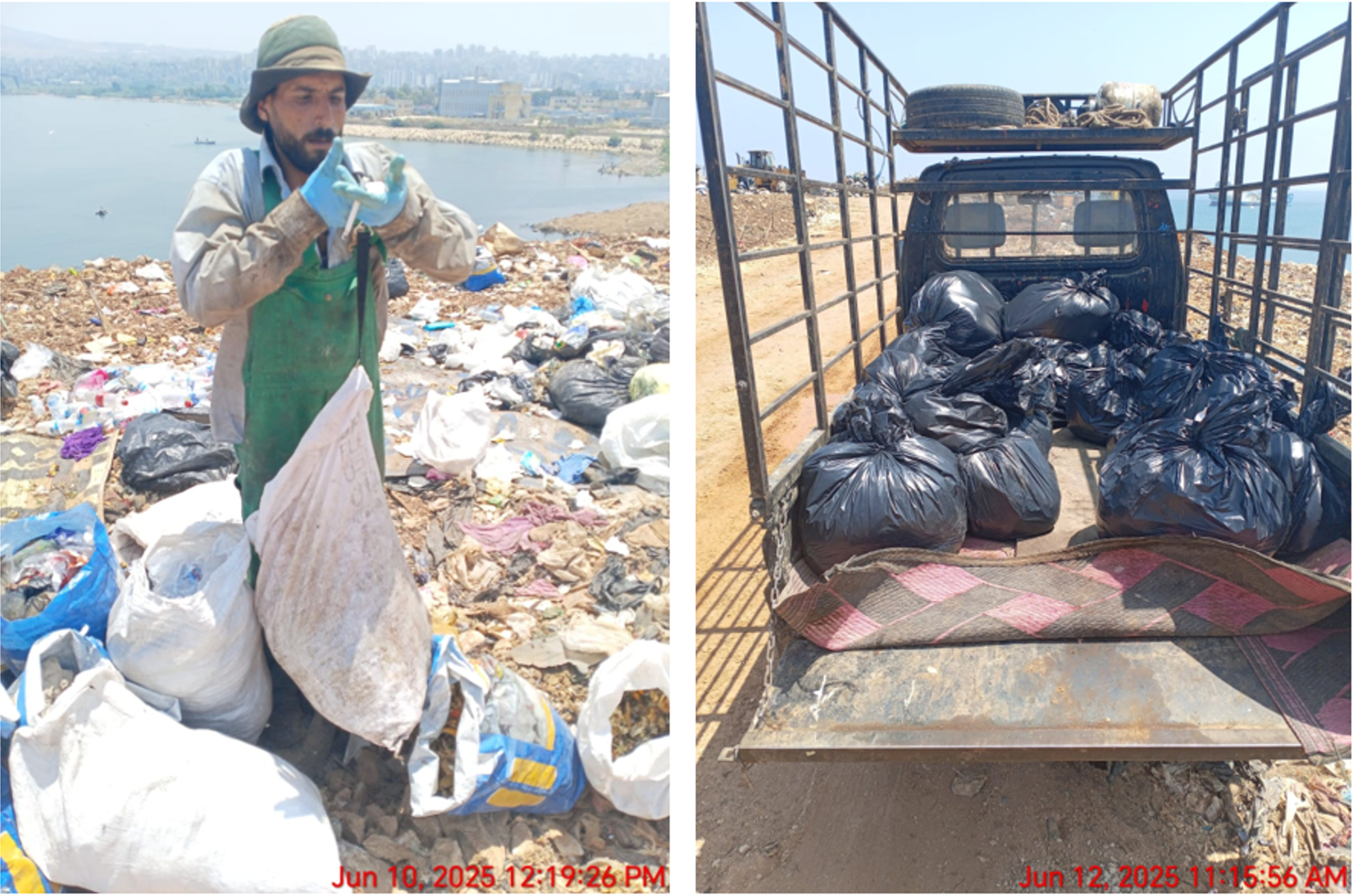
During June, July and August 2025, our partner Libanconsult AGM carried out a detailed waste assessment together with UN-Habitat Lebanon. Before starting the fieldwork, the team met with local authorities and community stakeholders to explain the process, align expectations, and ensure smooth coordination. Local staff also received hands-on training to support the data collection.
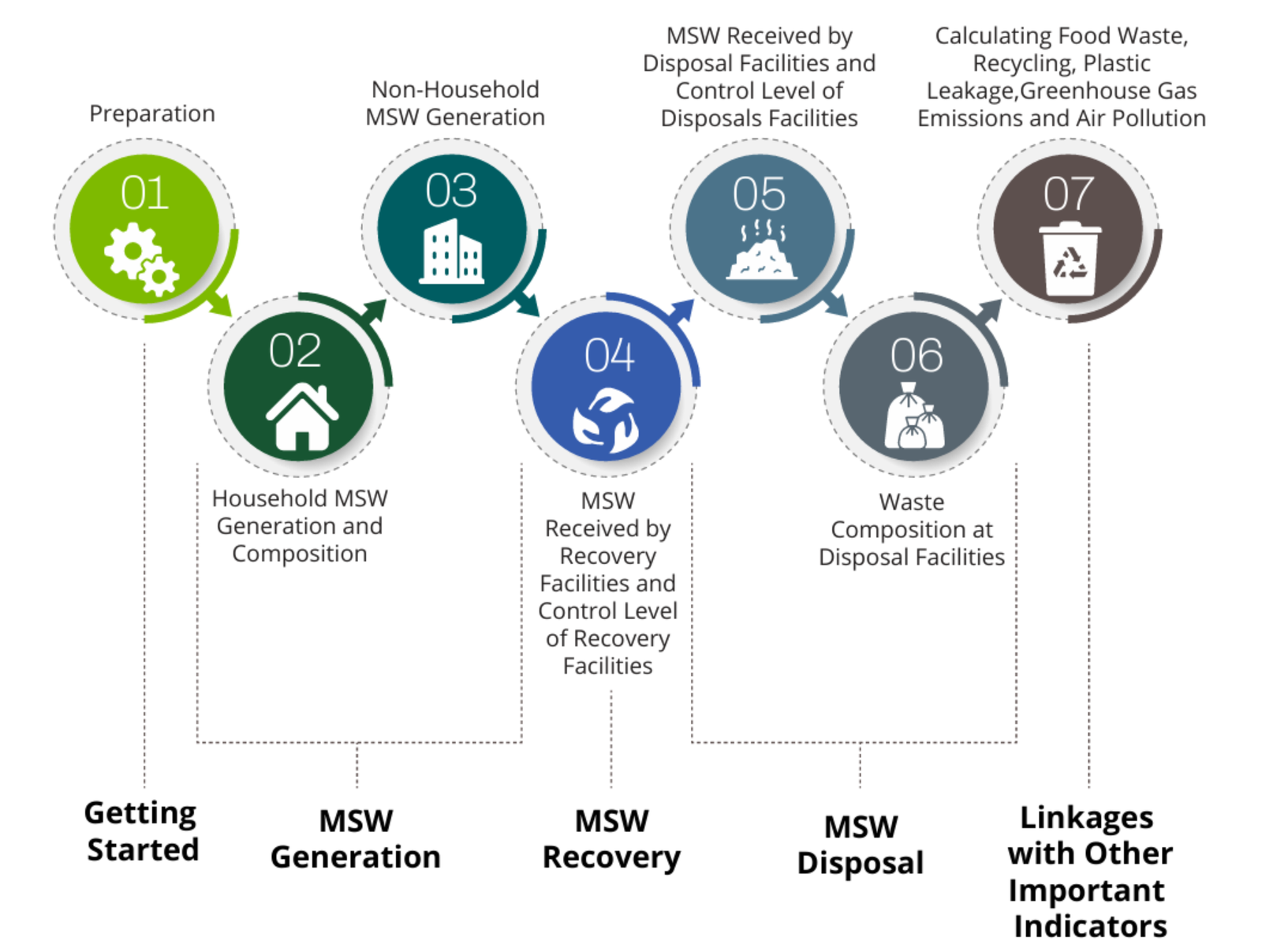
This assessment used three internationally recognised tools that help cities understand how much waste they generate, how it is handled, and where problems—such as plastic leakage—may occur. Together, these tools give a clear and up-to-date picture of the municipal solid waste system.
WaCT is a step-by-step method that helps cities measure how much of their municipal waste is safely collected and managed. It supports global Sustainable Development Goal (SDG) 11.6.1 and provides insights on food waste and resource recovery. Using WaCT, the team measured waste quantities, composition, and how waste moves through the system—from households to final disposal or recycling.
A sample of 33 households was selected across three representative sampling zones within SZ2. The selection process was guided by WaCT and refined through a socio-economic analysis conducted in coordination with local authorities.
The WFD maps what happens to waste after it is generated, with a special focus on plastics. It shows how waste flows through the system, where materials are recovered or reused, and where leakage into the environment occurs. This helps identify hotspots that require action.
WABIs offer a standardized way to evaluate how well the waste system is performing. The indicators cover both the physical aspects (collection, treatment, recycling) and the governance aspects (financial sustainability, inclusion of informal workers, and policy frameworks). These indicators help compare performance across areas and highlight key strengths and gaps.