
Data source:
World Bank (2022): Marine Litter Baseline in Lebanon 2021
International Pollutants Elimination Network (IPEN) annual report, 2022
World Bank (2023): Summary of the Lebanon Solid Waste Roadmap for 2023-2026
Waste Management Service Zones (SZs) are defined as the smallest administrative units within which an integrated waste management system operates comprehensively—covering all stages from waste generation to final disposal, with an emphasis on resource efficiency.
The delineation of these Service Zones is guided by a clear set of criteria, including:
Lebanon’s National Integrated Solid Waste Management Strategy (2024) and the Solid Waste Roadmap for Sector Reform and Priority Interventions (2023–2026)—both developed by the Ministry of Environment—identify 17 Waste Management Service Zones across the country. These zones are subject to periodic review and may be adjusted in response to national planning priorities, local strategies, infrastructure developments, and socio-environmental considerations.
The REMAL Project supports this national framework by developing Solid Waste Management Master Plans for six coastal Service Zones. These plans aim to establish actionable, sustainable, and financially viable operational models that enhance service delivery, promote circular economy principles, and strengthen environmental governance at the local level.
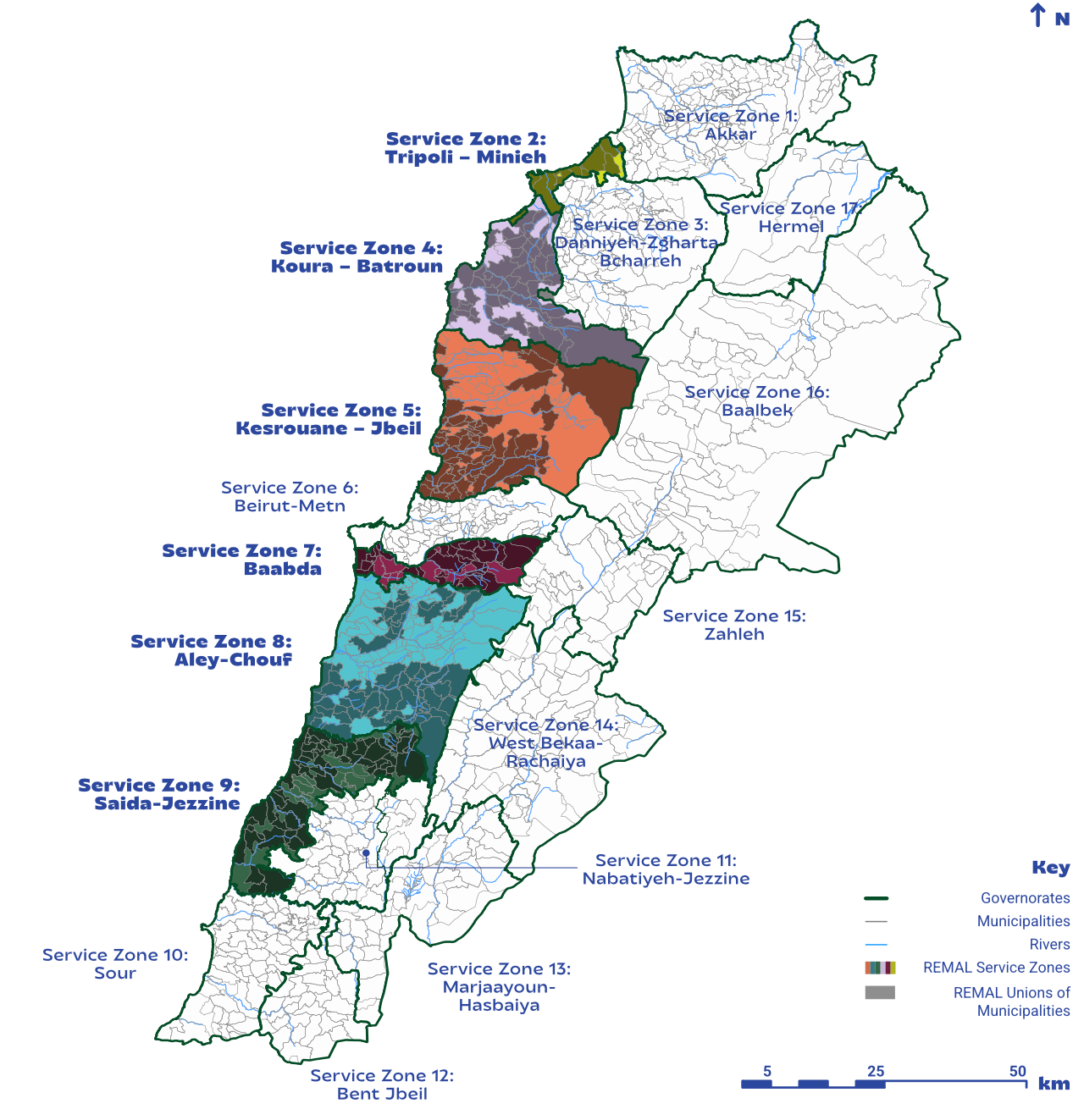
Data source: UN-Habitat Lebanon, 2025. Image: REMAL
*Disclaimer: The boundaries and names shown and the designations used on this map do not imply official endorsement or acceptance by the United Nations and the REMAL project.